
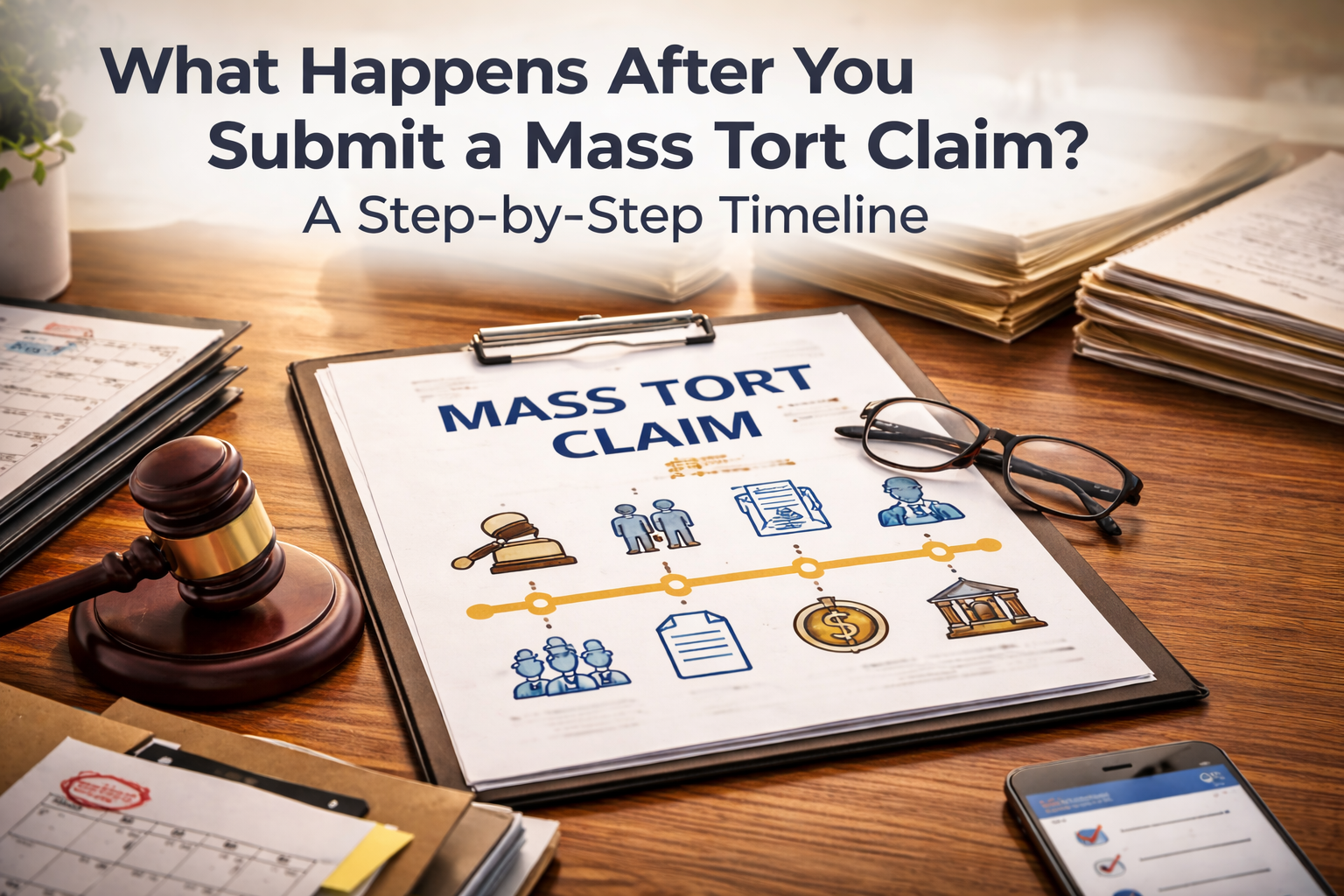
You’ve finally taken the step. After months or maybe years of suffering from injuries caused by a defective drug, dangerous medical device, or toxic exposure, you’ve decided to fight back. You’ve submitted your mass tort claim.
But now what?
The waiting begins, and with it comes a flood of questions. How long will this take? What happens behind the scenes? When will you hear back? Will you actually receive compensation, or is this just the beginning of another exhausting battle?
If you’re feeling anxious or uncertain about what comes next, you’re not alone. Most people filing mass tort claims have never navigated this process before, and the legal system can feel overwhelming, confusing, and frustratingly slow.
Understanding what to expect at each stage can ease your anxiety and help you stay informed throughout your legal journey. Whether you’re involved in litigation like Roundup cancer lawsuits, NEC baby formula cases, or Depo-Provera brain tumor claims, this guide walks you through every phase from initial filing to final compensation.
Contact us now for a free, confidential case review
Understanding Mass Torts: Why the Process Is Different
Before diving into timelines, it’s important to understand what makes mass tort litigation unique.
What Is a Mass Tort?
A mass tort is a civil action involving multiple plaintiffs who suffered similar harm from the same defendant’s product, drug, or conduct. Unlike class actions where everyone shares one settlement, mass tort plaintiffs maintain individual claims and receive compensation based on their specific injuries.
Common mass tort examples include:
- Dangerous pharmaceutical drugs
- Defective medical devices
- Toxic chemical exposure
- Harmful consumer products
- Environmental disasters
How Mass Torts Differ from Class Actions
Many people confuse mass torts with class actions, but they’re fundamentally different:
Mass Tort:
- Individual claims with separate evaluations
- Compensation based on your specific injuries
- You maintain control over your case
- Better for severe, varied injuries
Class Action:
- One lawsuit representing entire group
- Equal or formulaic distribution for everyone
- Class representative makes decisions
- Better for minor, uniform damages
Why Mass Torts Take Time
Several factors make mass tort litigation lengthy:
Volume of cases: Hundreds or thousands of plaintiffs filing simultaneously
Complex science: Proving causation requires extensive medical and scientific evidence
Discovery scale: Reviewing millions of internal company documents
Coordination challenges: Managing cases filed in multiple jurisdictions
High stakes: Defendants fight aggressively because liability affects thousands of claims
Bellwether trials: Test cases establishing value before global settlements
Understanding these complexities helps set realistic expectations for your journey.
Phase 1: Initial Case Review and Evaluation
What Happens Immediately After Submission
Within 24-48 Hours:
Your submission triggers an immediate response:
- Your information is entered into the case management system
- An intake specialist is assigned to review your questionnaire
- Preliminary eligibility screening begins
- You receive confirmation your inquiry was received
Week 1:
The intake team conducts initial evaluation:
- Reviews your product exposure or drug usage history
- Examines the timing of your diagnosis
- Checks basic eligibility criteria for the specific mass tort
- Identifies any immediate disqualifying factors
- Schedules a follow-up call if your case looks promising
Weeks 2-4:
If you pass initial screening, deeper investigation begins:
- Requests detailed medical records from healthcare providers
- Reviews diagnostic imaging, pathology reports, and treatment notes
- Verifies prescription records or purchase history
- Analyzes statute of limitations deadlines in your state
- Assigns a case manager or attorney to your file
The Attorney Consultation
Most mass tort firms offer free consultations before officially accepting your case.
What to Expect:
The attorney will ask detailed questions about:
- When and how long you used the product or drug
- Your complete medical history and diagnoses
- Previous treatments and surgeries
- How the injury has affected your daily life and work
- Your goals and expectations for the case
Questions You Should Ask:
- Does my case meet the eligibility criteria?
- What is the estimated timeline for this litigation?
- How often will I receive updates?
- What documents do you need from me?
- What are potential settlement ranges for similar injuries?
- What percentage of any recovery goes to attorney fees?
- Are there any upfront costs?
Important: Most mass tort attorneys work on contingency you pay nothing unless you win.
Case Acceptance or Rejection
Not every submission becomes a case.
Cases Are Typically Accepted When:
- Clear exposure to the product during relevant timeframe
- Diagnosed injury matching the known harm pattern
- Medical records supporting causation
- Claim filed within statute of limitations
- Damages significant enough to justify litigation
Cases May Be Rejected When:
- Exposure timeline doesn’t match
- Diagnosed condition not linked to the product
- Statute of limitations has expired
- Pre-existing conditions complicate causation
- Insufficient medical documentation
If accepted, you’ll move forward with a representation agreement.
Your Action Items:
✓ Respond promptly to requests for information
✓ Gather medical records and prescriptions
✓ Attend scheduled consultation calls
✓ Ask questions if anything is unclear
Phase 2: Case Filing and MDL Consolidation
Signing the Representation Agreement
Your first official step is signing a retainer agreement.
This document outlines:
- Attorney’s fee percentage (typically 33-40% of recovery)
- Who pays case costs and litigation expenses
- Your rights and responsibilities as a client
- Attorney’s obligations to represent you
- How and when you can terminate the relationship
Read this carefully and ensure you understand the fee structure and who pays for expert witnesses.
Understanding Multidistrict Litigation (MDL)
Most qualifying cases are consolidated into federal Multidistrict Litigation (MDL). The Judicial Panel on Multidistrict Litigation transfers cases from courts nationwide to a single federal court for coordinated pretrial proceedings.
MDL Benefits:
- Efficiency: Streamlined discovery instead of thousands of separate proceedings
- Cost reduction: Eliminates duplicative efforts
- Consistency: Similar cases receive similar treatment
- Settlement leverage: Consolidating thousands of cases creates pressure for fair negotiations
The Filing Process
Your attorney formally files your complaint detailing:
- Your injuries and how they occurred
- The defendant’s alleged wrongdoing
- Legal basis for your claim
- Compensation being sought
Once filed, the defendant receives formal notice and must respond.
The court appoints a Plaintiff Steering Committee (PSC) to coordinate litigation and selects “bellwether” cases for early trial to test claim strength and establish settlement values.
Your Action Items:
✓ Sign retainer agreement promptly
✓ Authorize all medical records releases
✓ Gather documentation you have at home
✓ Maintain detailed records of ongoing treatments
Phase 3: Discovery and Evidence Gathering (Months 6-24)
The Most Critical Phase
Discovery is the longest, most intensive phase where both sides gather evidence and build their cases. While it feels slow, discovery is essential for establishing facts and proving liability.
Medical Record Collection
Your case cannot move forward without comprehensive medical documentation.
What Your Attorney Will Request:
- Hospital admission and discharge summaries
- Diagnostic test results (MRI, CT scans, biopsies, bloodwork)
- Pathology and radiology reports
- Surgical operative notes
- Prescription and pharmacy records
- Treatment plans and progress notes
- Billing and cost documentation
Why This Takes Time:
Healthcare providers have 30-90 days to respond to records requests, and some require patient authorization forms, fees, or multiple follow-ups.
What You Can Do:
- Sign all authorization forms promptly
- Contact your doctors’ offices directly
- Keep copies of all medical records you already have
- Create a timeline of your medical history
Key Discovery Activities
Document Production:
Exchange of millions of pages including:
- Internal company communications
- Research data and clinical trials
- FDA documents and correspondence
- Adverse event reports
Depositions:
Sworn testimony from:
- Plaintiffs (including you)
- Medical experts
- Company executives
- Healthcare providers
Your Deposition:
At some point, you’ll likely be deposed giving sworn testimony answering questions from defense attorneys.
Preparation Tips:
- Your attorney will prepare you extensively beforehand
- Answer only the question asked
- If you don’t know or don’t remember, say so
- Tell the truth always
- Stay calm and professional
- Take breaks if needed
Depositions typically last 2-8 hours.
Expert Witness Development:
Both sides hire experts to testify:
- Medical causation experts
- Pharmacologists and toxicologists
- Epidemiologists
- Economists
- Life care planners
Bellwether Trials: The Game-Changer
One of the most critical aspects of MDL litigation is bellwether trials.
What Are Bellwether Trials?
The court selects 6-12 representative cases to go to trial first, giving both sides insight into how juries view the evidence.
Why They Matter:
- Establish case values: Jury verdicts show what injuries are worth
- Reveal strengths/weaknesses: Both sides learn what evidence works
- Create settlement pressure: Strong plaintiff victories often trigger global settlements
- Test legal theories: Judges rule on key issues affecting all cases
Bellwether Outcomes:
Looking at past mass torts, verdicts can vary widely. Strong plaintiff verdicts in early bellwether trials often lead to substantial settlement negotiations, while mixed results may extend litigation.
Your Action Items:
✓ Respond to all discovery requests promptly
✓ Prepare for deposition with your attorney
✓ Continue documenting ongoing medical treatment
✓ Update your attorney about condition changes
✓ Be patient this is the longest phase
Phase 4: Settlement Negotiations (Months 12-48)
How Mass Tort Settlements Work
Approximately 95% of mass tort cases settle before trial. Settlements benefit both sides defendants avoid uncertainty and expense while plaintiffs receive faster, guaranteed compensation.
Global Settlement Structures
Most mass torts end in global settlements where the defendant creates a settlement fund to compensate large numbers of plaintiffs.
How It Works:
- Settlement fund creation: Defendant commits funds to settlement
- Point system development: Formulas assign values to different injury types
- Individual claim evaluation: Each case is scored based on injury severity, exposure, and other factors
- Settlement offer: Plaintiffs receive individual offers based on their scores
- Accept or reject decision: Each plaintiff decides whether to accept or proceed to trial
Settlement Tiers
Mass torts typically use tiered structures based on injury severity:
Tier 1: Death, permanent disability, cancer, catastrophic injuries
Tier 2: Serious injuries requiring major surgery or ongoing treatment
Tier 3: Moderate injuries with documented medical intervention
Tier 4: Minor injuries with limited treatment
Factors Affecting Your Settlement
Your settlement amount depends on:
- Severity and permanence of injury
- Medical expenses (past and future)
- Lost wages and earning capacity
- Pain and suffering
- Age and life expectancy
- Product usage duration
- Quality of documentation
Typical Settlement Ranges by Injury Severity
Understanding realistic compensation helps set expectations:
Minor Injuries: $10,000 – $75,000
Moderate Injuries: $75,000 – $250,000
Serious Injuries: $250,000 – $750,000
Severe/Catastrophic: $750,000 – $3,000,000+
Wrongful Death: $1,000,000 – $10,000,000+
Your actual compensation depends on specific case facts, overall settlement structure, and evidence strength.
Your Settlement Decision
You’ll receive a detailed offer explaining:
- The settlement amount
- How it was calculated
- What it covers
- Payment timeline
You always have the right to accept or reject. Your attorney advises, but the final decision is yours.
Pros of Settling:
- Guaranteed compensation
- Faster resolution
- Avoid trial stress
- No risk of losing
- Certainty for financial planning
Cons of Settling:
- Might receive less than trial verdict
- Cannot sue again later
- Must sign release agreements
Understanding Payment Deductions
Your settlement check will not be the full settlement amount.
Example Breakdown for $200,000 Settlement:
- Gross settlement: $200,000
- Attorney fees (40%): -$80,000
- Litigation costs: -$15,000
- Medicare lien: -$20,000
- Your net payment: $85,000
Common deductions include:
- Attorney fees (33-40%)
- Litigation costs (medical records, experts, depositions)
- Medical liens (Medicare, Medicaid, private insurance)
- Hospital liens
Your Action Items:
✓ Carefully review settlement offers with attorney
✓ Understand trade-offs between settling and trial
✓ Ask questions about deductions
✓ Don’t feel pressured to accept immediately
Phase 5: Trial (If Settlement Fails) – Months 24-60+
When Cases Go to Trial
While rare, some cases proceed to trial when:
- Settlement negotiations fail
- Offers are inadequate
- Your case has unique strengths warranting trial
Trial Process
Trial preparation includes:
- Finalizing evidence and exhibits
- Witness preparation
- Expert witness finalization
- Jury selection
- Opening statements
- Evidence presentation
- Closing arguments
- Jury deliberation and verdict
Potential Outcomes:
Plaintiff Victory: Jury awards compensatory damages and potentially punitive damages
Defense Victory: No compensation, though appeals may be possible
Post-Trial Appeals: Either side can appeal, extending timeline 1-2 years
Most cases settle even during trial before verdict.
Phase 6: Payment and Distribution
Receiving Your Compensation
Once settlement is approved or verdict rendered, several steps occur before payment.
Settlement Distribution Process:
Weeks 1-2: Final Documentation
- Sign release and settlement agreement
- Submit updated medical bills
- Provide tax information (W-9 forms)
- Resolve outstanding liens
Weeks 3-6: Processing
- Settlement administrator reviews documentation
- Defendant funds settlement payment
- Court approval (if required)
Weeks 6-12: Payment Distribution
- Settlement checks issued to law firm
- Law firm deposits into trust account
- Attorney fees and costs deducted
- Lien holders paid
- Final payment check issued to you
Total timeline from acceptance to payment: Typically 2-6 months
Tax Implications
Generally Non-Taxable:
- Compensation for physical injuries or illness
- Medical expenses reimbursement
- Physical pain and suffering
Potentially Taxable:
- Punitive damages (always taxable)
- Interest on delayed payments
- Lost wages (treated as income)
Important: Consult a tax professional about your specific settlement.
Your Action Items:
✓ Sign all settlement documents promptly
✓ Provide accurate banking information
✓ Resolve any liens quickly
✓ Consult a tax professional
✓ Plan financially for your payment
Realistic Timeline: From Start to Finish
Average Mass Tort Timeline
Fast-Moving Cases: 18-36 months
- Streamlined discovery
- Quick bellwether trials
- Defendant motivated to settle early
Average Cases: 3-5 years
- Typical MDL discovery process
- Multiple bellwether trial rounds
- Complex causation issues
Slow-Moving Cases: 5-10+ years
- Novel legal theories requiring appeals
- Emerging science needing development
- Defendant fighting aggressively
Complete Phase-by-Phase Timeline
Phase 1: Initial Review → 2-6 weeks
Phase 2: Case Development → 3-8 months
Phase 3: MDL Discovery → 12-36 months
Phase 4: Settlement/Trial → 6-24+ months
Phase 5: Payment → 2-6 months
TOTAL: 2-7+ years from submission to payment
Common Delays and How to Avoid Them
Factors That Slow Cases
Incomplete documentation or missing medical records
Unresolved liens from medical providers or insurance
Court backlogs in federal MDL courts
Defendant appeals extending timelines
Complex medical issues requiring additional expert analysis
Bankruptcy proceedings requiring trust establishment
Keep Your Case Moving
✓ Respond to attorney requests within 24-48 hours
✓ Maintain organized medical and expense records
✓ Attend all required appointments and examinations
✓ Continue medical treatment as recommended
✓ Stay in contact with your legal team
✓ Avoid posting about your case on social media
Social Media Warning: Defense attorneys monitor Facebook, Instagram, and Twitter. Photos showing you appearing healthy can undermine injury claims. Adjust privacy settings or stay off social media entirely during litigation.
Frequently Asked Questions
1. How long does a mass tort case typically take from start to finish?
Most mass tort cases resolve within 2-5 years from initial filing to final payment. Simple cases with clear causation might settle in 18-24 months, while complex litigation can extend to 7-10 years. Timeline depends on the number of plaintiffs, complexity of scientific evidence, bellwether trial results, and defendant cooperation. Similar cases like AFFF firefighting foam lawsuits and talcum powder litigation have shown varying timelines based on these factors. Contact Legal Claim Counsel for realistic expectations about your specific situation.
2. Will I have to testify in court or give a deposition?
You’ll likely be deposed during discovery giving sworn testimony to defense attorneys in a law office with a court reporter present. Depositions typically last 2-6 hours and can feel intimidating, but your attorney will prepare you extensively. However, you probably won’t testify in court because over 95% of mass tort cases settle before trial. Only bellwether plaintiffs (a tiny fraction) go to trial. If settlement negotiations fail and your case proceeds to trial, you’ll testify in court, but your attorney will prepare you for months beforehand.
3. How is my settlement amount calculated in a mass tort case?
Mass tort settlements typically use a point-based matrix system assigning values to various factors: injury severity (highest weight), age and life expectancy, total medical expenses, lost wages and earning capacity, product usage duration, and quality of medical documentation. Your total points are multiplied by a dollar value to calculate your settlement. For example, Tier 1 injuries (cancer, death, catastrophic harm) receive the highest multipliers, while Tier 4 (minor injuries) receive lower amounts. Your attorney will explain exactly how your settlement was calculated and what factors affected your specific amount.
4. What happens if the defendant company declares bankruptcy?
Bankruptcy doesn’t eliminate your claim but changes the process. When defendants file Chapter 11, an automatic stay temporarily halts all litigation. The company proposes a reorganization plan creating a settlement trust to pay claims. You’ll need to file a proof of claim in bankruptcy court. This happened with talcum powder cases and multiple asbestos manufacturers. Bankruptcy can delay resolution by 1-3 years but doesn’t eliminate your compensation rights. The trust pays claims based on injury severity, though amounts may be reduced compared to pre-bankruptcy settlement offers. Experienced mass tort attorneys navigate bankruptcy proceedings routinely and will protect your rights throughout the process.
5. Can I reject a settlement offer and go to trial instead?
Yes, you always have the right to reject a settlement offer and proceed to trial. Your attorney should explain the risks and benefits of both options without pressuring you. If you reject settlement, your case continues through discovery, potential trial preparation, and possibly trial itself. Some plaintiffs reject settlements and win larger verdicts at trial, while others lose at trial and receive nothing. Settlement offers may expire, meaning rejecting could mean no second chance at that amount. Consider that trials involve significant risk juries are unpredictable, and you could lose entirely. Discuss thoroughly with your attorney, weighing guaranteed settlement money against the uncertainty and delay of trial, before making your decision.
Why Choose Legal Claim Counsel
At Legal Claim Counsel, we understand the frustration and anxiety of waiting for justice after being harmed by a dangerous product.
Our Commitment to Clients
What Sets Us Apart:
✓ Transparent communication: Regular updates on case progress and developments
✓ Experienced mass tort attorneys: Decades of combined experience with pharmaceutical and product liability litigation
✓ Personalized attention: Dedicated case managers for each client
✓ No upfront costs: Contingency fee structure—you pay nothing unless we win
✓ Nationwide representation: We handle cases in all 50 states
✓ Proven track record: Millions recovered for clients in major mass tort litigations
We Handle All Major Mass Torts:
Depo-Provera brain tumor lawsuits | Roundup cancer claims | NEC baby formula litigation | AFFF firefighting foam exposure | Talcum powder cancer cases | Hair relaxer lawsuits
Don’t Wait: Protect Your Rights Now
If you’ve been harmed by a defective drug, dangerous device, or harmful product, time is critical. Every state has a statute of limitations a legal deadline for filing. Once it passes, you lose your right to compensation forever.
Why Acting Now Matters
Statutes of limitations are strict – missing your deadline means losing your rights forever
Evidence preservation is critical – medical records must be gathered promptly
Bellwether trials are approaching in many major mass torts
Settlement negotiations are ongoing – joining now ensures inclusion
Free consultations mean no risk – exploring options costs nothing
Contact Legal Claim Counsel Today
Don’t let another day pass wondering if you have a case.
Contact us now for a free, confidential consultation
Our experienced mass tort attorneys are ready to:
- Evaluate your case at no cost
- Answer all your questions about the process
- Explain realistic timelines and expectations
- Fight for the compensation you deserve
You trusted a product to keep you safe.
Instead, it caused harm.
Now it’s time to hold them accountable.
Let Legal Claim Counsel guide you through every step of the mass tort claim process.
Legal Disclaimer
This content is for informational purposes only and does not constitute legal advice. Reading this article does not create an attorney-client relationship. Laws vary by state and jurisdiction, and each case is unique.
For specific legal advice about your situation, please contact our office for a free, confidential consultation.
Related Articles: