
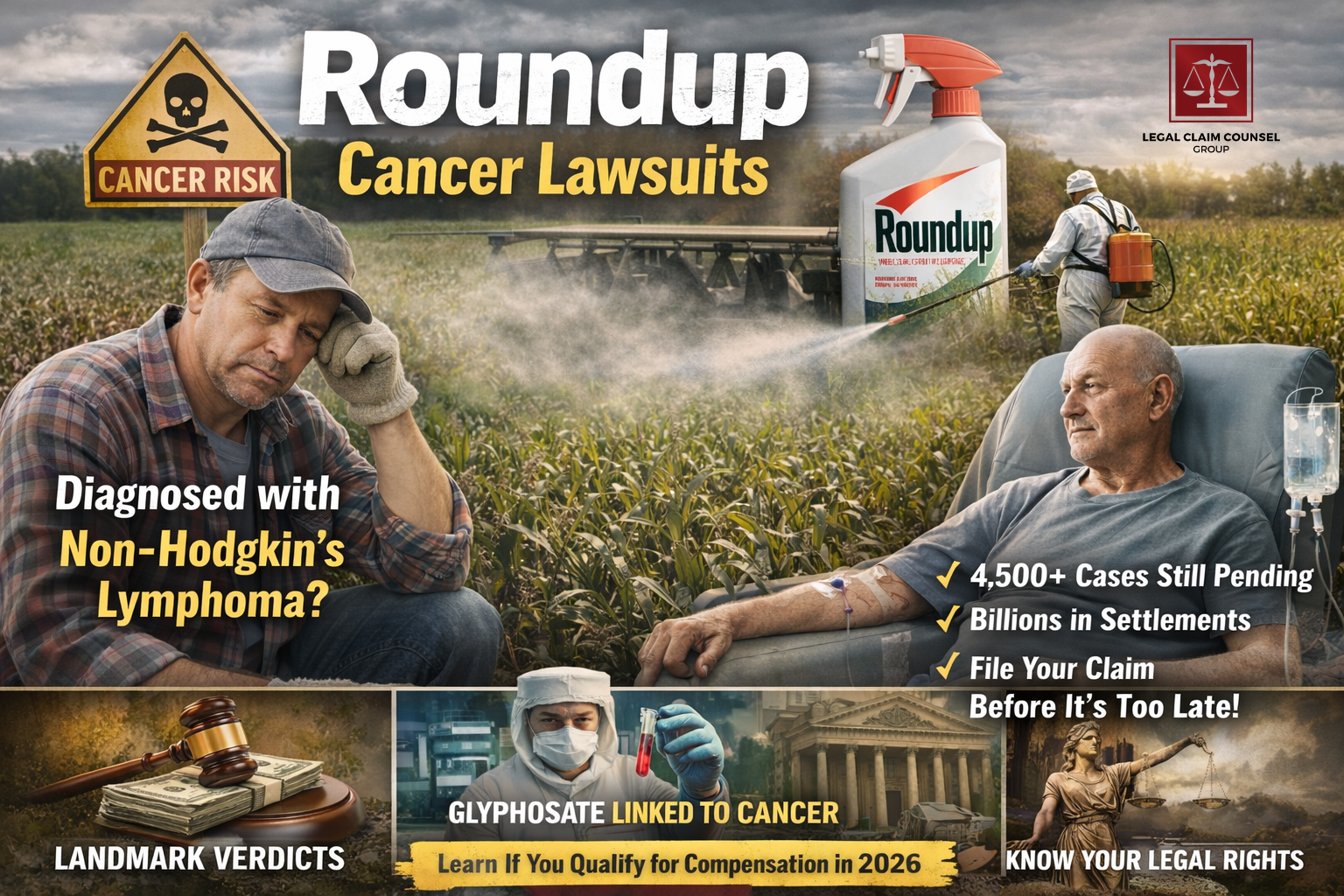
For decades, Roundup has been one of the most widely used weed killers in America. Homeowners, farmers, landscapers, and gardeners trusted Monsanto’s (now Bayer) assurances that their glyphosate-based herbicide was safe. But mounting evidence tells a different story one of cancer diagnoses, corporate negligence, and billions in settlements.
If you or a loved one developed non-Hodgkin’s lymphoma after using Roundup, you may be entitled to significant compensation. With over 4,500 cases still pending in federal court and new lawsuits being filed in 2026, it’s not too late to take action.
This comprehensive guide breaks down everything you need to know about Roundup cancer lawsuits, the latest evidence linking glyphosate to non-Hodgkin’s lymphoma, and whether you can still file a claim.
What Is Roundup and Why Is It Dangerous?
Roundup is a popular herbicide manufactured by Monsanto (acquired by Bayer in 2018). Its active ingredient, glyphosate, is designed to kill weeds and unwanted vegetation. While Monsanto marketed Roundup as safe for humans and pets, scientific research has raised serious concerns about its cancer-causing potential.
The Science Behind Glyphosate and Cancer
In 2015, the World Health Organization’s International Agency for Research on Cancer (IARC) classified glyphosate as a “probable human carcinogen.” Multiple studies have since linked prolonged glyphosate exposure to:
- Non-Hodgkin’s lymphoma (NHL)
- B-cell lymphoma
- Leukemia (especially with prenatal exposure)
- Liver damage
- Reproductive and metabolic disorders
A 2026 study further highlighted glyphosate’s role in tumor development and its potential to cause harm even at levels deemed “safe” by regulatory agencies. Researchers found that co-formulants in Roundup may enhance cancer risks beyond glyphosate alone.
Who Is Most at Risk?
Certain groups face higher exposure levels and increased cancer risk:
- Farmers and agricultural workers who spray Roundup regularly
- Landscapers and groundskeepers exposed during routine maintenance
- Gardeners and homeowners who used Roundup for lawn care
- Golf course employees who applied herbicides on turf
- Nursery workers handling treated plants
If you used Roundup for 50+ hours cumulatively or had long-term occupational exposure, your risk of developing non-Hodgkin’s lymphoma significantly increases.
The History of Roundup Lawsuits: Billions in Settlements
Roundup litigation has become one of the largest mass tort cases in U.S. history. Here’s how it unfolded:
1. Landmark Verdicts That Changed Everything
Johnson v. Monsanto (2018)
- Dewayne “Lee” Johnson, a school groundskeeper, was awarded $289 million (later reduced to $78 million) after developing terminal non-Hodgkin’s lymphoma from Roundup exposure.
- This verdict opened the floodgates for thousands of similar lawsuits.
Hardeman v. Monsanto (2019)
- Edwin Hardeman received $80 million (reduced to $25 million) after using Roundup for decades on his property.
Pilliod v. Monsanto (2019)
- A California jury awarded $2.055 billion to Alva and Alberta Pilliod, both diagnosed with non-Hodgkin’s lymphoma after years of Roundup use.
2. Bayer’s $11 Billion Settlement
Facing mounting legal pressure, Bayer agreed to settle approximately 170,000 Roundup claims for nearly $11 billion between 2020 and 2025. However, this settlement did not resolve all cases.
3. Current Litigation Status in 2026
As of January 2026:
- Over 4,500 cases remain pending in federal multidistrict litigation (MDL) in California
- 92 plaintiffs filed a consolidated lawsuit in Delaware in August 2025
- 41+ cases are moving toward multicounty litigation in New Jersey
- New cases continue to be filed as more victims come forward
Recent verdicts show juries are still siding with plaintiffs:
- Missouri court upheld $611 million in awards to three NHL plaintiffs (May 2025)
- Pennsylvania affirmed $175 million verdict for Ernest Caranci (May 2025)
- Georgia court awarded $2.1 billion (March 2025)
New Evidence Linking Glyphosate to Non-Hodgkin’s Lymphoma
Scientific research continues to strengthen the connection between Roundup and cancer. Here’s what the latest studies reveal:
1. WHO Classification as “Probable Carcinogen”
The IARC’s 2015 classification remains a cornerstone of Roundup litigation. Their review of multiple studies found “limited evidence” of carcinogenicity in humans and “sufficient evidence” in animal studies.
2. 2026 Research on Tumor Development
A recent study published in 2026 identified glyphosate’s potential mechanisms for causing:
- Tumor growth and proliferation
- Leukemia, particularly with prenatal exposure
- Liver toxicity and metabolic dysfunction
- Reproductive system damage
3. Co-Formulant Concerns
Researchers discovered that Roundup’s “inert” ingredients (co-formulants) may amplify glyphosate’s toxic effects. These chemicals can:
- Increase cellular absorption of glyphosate
- Enhance DNA damage
- Disrupt hormonal systems
4. Exposure Duration Studies
Studies show that individuals exposed to Roundup for 50+ hours after 1974 face significantly elevated risks of developing non-Hodgkin’s lymphoma and B-cell lymphoma.
5. Supreme Court Review
The U.S. Supreme Court is currently reviewing a glyphosate cancer case that could have far-reaching implications for future pesticide lawsuits and regulatory standards.
Can You Still File a Roundup Lawsuit in 2026?
Yes, you can still file a Roundup lawsuit in 2026, but time is critical. Here’s what you need to know:
Statute of Limitations by State
Filing deadlines vary by state, typically ranging from 1 to 6 years (most commonly 2-3 years) from:
- The date of your cancer diagnosis
- When you discovered the link between Roundup and your illness
- The date of death (for wrongful death claims)
Important: Statutes of limitations are strict. Missing your deadline means losing your right to compensation forever.
Eligibility Requirements
To qualify for a Roundup lawsuit, you typically need:
1. Documented Roundup Exposure
- Personal use for lawn/garden care
- Occupational exposure (farming, landscaping, etc.)
- Cumulative exposure of 40-50+ hours
2. Qualifying Cancer Diagnosis
- Non-Hodgkin’s lymphoma (NHL)
- B-cell lymphoma
- Diffuse large B-cell lymphoma (DLBCL)
- Follicular lymphoma
- Other related blood cancers
3. Diagnosis Timeline
- Typically diagnosed at least 2 years after first Roundup exposure
4. Supporting Evidence
- Medical records confirming diagnosis
- Purchase receipts for Roundup products
- Employment records showing occupational exposure
- Photos or documentation of Roundup use
How Much Compensation Can You Receive?
Roundup lawsuit settlements and verdicts vary significantly based on several factors:
Factors Affecting Compensation
1. Severity of Your Cancer
- Stage and progression of non-Hodgkin’s lymphoma
- Treatment required (chemotherapy, radiation, surgery)
- Prognosis and life expectancy
2. Duration and Frequency of Exposure
- Years of Roundup use
- Occupational vs. residential exposure
- Cumulative hours of contact
3. Economic Damages
- Medical bills (past and future)
- Lost wages and earning capacity
- Rehabilitation and ongoing care costs
4. Non-Economic Damages
- Pain and suffering
- Emotional distress
- Loss of quality of life
- Loss of consortium (for spouses)
5. Punitive Damages
- Awarded to punish Monsanto/Bayer for negligence
- Based on evidence of corporate misconduct
Recent Settlement and Verdict Amounts
While individual payouts vary, recent cases show substantial compensation:
- $2.1 billion (Georgia, March 2025)
- $611 million for three plaintiffs (Missouri, May 2025)
- $175 million (Pennsylvania, May 2025)
- Average settlements from Bayer’s $11 billion fund ranged from $50,000 to several million depending on case strength
Note: Most Roundup lawsuits are handled on a contingency fee basis, meaning you pay nothing unless you win your case.
Steps to File a Roundup Cancer Lawsuit
If you believe you qualify, follow these steps to protect your legal rights:
Step 1: Gather Your Documentation
Collect all relevant evidence:
- Medical records showing your cancer diagnosis
- Pathology reports and treatment records
- Receipts or photos proving Roundup purchase/use
- Employment records (if occupational exposure)
- Witness statements from family or coworkers
Step 2: Consult a Specialized Attorney
Roundup cases are complex and require attorneys experienced in mass tort litigation and product liability law. At Legal Claim Counsel, we specialize in helping victims of dangerous products seek justice.
Most consultations are free, and attorneys work on contingency (no upfront costs).
Step 3: File Your Claim
Your attorney will:
- Evaluate your case strength
- Determine the appropriate jurisdiction
- File your lawsuit before the statute of limitations expires
- Join existing MDL or state court litigation
Step 4: Discovery and Evidence Gathering
Both sides exchange information:
- Medical expert testimonies
- Scientific studies on glyphosate
- Internal Monsanto documents
- Exposure history verification
Step 5: Settlement Negotiations or Trial
Most cases settle before trial, but your attorney should be prepared to:
- Negotiate maximum compensation
- Present your case to a jury if necessary
- Appeal unfavorable decisions
Why Monsanto/Bayer Continues to Deny the Cancer Link
Despite overwhelming evidence and billions in settlements, Bayer maintains that Roundup is safe. Here’s why:
1. Regulatory Support
The U.S. Environmental Protection Agency (EPA) has stated glyphosate is “not likely” to be carcinogenic to humans. However, critics argue:
- The EPA relied heavily on industry-funded studies
- Independent research contradicts these findings
- Regulatory capture may influence EPA decisions
2. Economic Interests
Roundup generates billions in annual revenue. Admitting the cancer link would:
- Expose Bayer to unlimited liability
- Destroy market confidence in glyphosate products
- Impact agricultural industries worldwide
3. Legal Strategy
By denying liability, Bayer:
- Forces plaintiffs to prove causation in court
- Delays settlements and reduces payout amounts
- Discourages potential claimants from filing
4. Conflicting Studies
Monsanto cites over 700 studies claiming glyphosate is safe. However:
- Many were funded by the agrochemical industry
- Independent peer-reviewed research shows opposite conclusions
- The IARC’s classification carries significant scientific weight
Frequently Asked Questions (FAQs)
1. How long do I have to file a Roundup lawsuit?
Statutes of limitations vary by state, typically 1-6 years (most commonly 2-3 years) from your diagnosis date or when you discovered the Roundup-cancer link. Contact us immediately to determine your specific deadline.
2. What if I used Roundup years ago but was just diagnosed?
You may still qualify. The statute of limitations typically begins when you’re diagnosed or discover the connection between Roundup and your cancer, not when exposure occurred. Our team at Legal Claim Counsel can evaluate your case during a free consultation.
3. Can family members file if my loved one died from non-Hodgkin’s lymphoma?
Yes. Surviving family members can file wrongful death claims seeking compensation for medical expenses before death, funeral and burial costs, loss of financial support, and loss of companionship and consortium.
4. How much does it cost to hire a Roundup lawyer?
Most Roundup attorneys, including Legal Claim Counsel, work on contingency, meaning no upfront fees or costs. You pay only if you win, and attorney fees (typically 33-40%) come from your settlement. Free initial consultations are available.
5. What types of non-Hodgkin’s lymphoma qualify for a lawsuit?
Qualifying diagnoses typically include diffuse large B-cell lymphoma (DLBCL), follicular lymphoma, chronic lymphocytic leukemia (CLL), mantle cell lymphoma, marginal zone lymphoma, and other NHL subtypes. Contact our experienced team to discuss your specific diagnosis.
Take Action: Protect Your Rights Today
If you or a loved one developed non-Hodgkin’s lymphoma after using Roundup, time is running out to file your claim. With thousands of cases still pending and new evidence strengthening the glyphosate-cancer link, 2026 may be your last opportunity to seek justice and compensation.
Why You Should Act Now:
- Statutes of limitations are approaching for many victims
- New cases are being filed and joined to existing litigation
- Jury verdicts continue favoring plaintiffs with strong evidence
- Free consultations mean no risk in exploring your options
- Contingency fee arrangements require no upfront payment
Don’t let Monsanto/Bayer’s corporate resources intimidate you. Experienced Roundup attorneys have the knowledge, resources, and track record to fight for maximum compensation on your behalf.
Contact Legal Claim Counsel Today
Our experienced legal team at Legal Claim Counsel has helped thousands of mass tort victims secure the compensation they deserve. We offer:
- Free case evaluations with no obligation
- No fees unless we win your case
- Nationwide representation in all 50 states
- Proven track record in mass tort litigation
- Compassionate support throughout the legal process
Contact us today for a free, confidential consultation.
Your fight against cancer shouldn’t include a fight for justice. Let us handle the legal battle while you focus on your health and family.
Related Articles
- Talcum Powder Lawsuit: Can You Still File a Claim?
- NEC Baby Formula Lawsuit: Protecting Your Child’s Rights
- Hair Relaxer Lawsuit: Cancer Risks and Legal Options
- About Legal Claim Counsel: California’s Mass Tort Experts
- Contact Us for a Free Case Review
Disclaimer
This article is for informational purposes only and does not constitute legal or medical advice. Every Roundup case is unique, and outcomes depend on individual circumstances. Consult with a qualified attorney to discuss your specific situation and legal options. Past results do not guarantee future outcomes.