If a prescription drug was supposed to help but instead left you with lasting injuries, medical bills, and unanswered questions you are not alone. Thousands of Americans file defective drug claims each year after discovering that a medication was unsafe, improperly tested, or marketed without proper warnings.
One of the most common questions we hear at Legal Claim Counsel is:
“What evidence do I actually need to prove a defective drug claim?”
This guide breaks it down in clear, human terms no legal jargon so you understand exactly what matters, what helps your case, and how to protect your rights.
What Is a Defective Drug Claim?
A defective drug claim is a type of product liability case. It alleges that a medication caused harm because it was:
- Dangerously designed
- Improperly manufactured
- Marketed without adequate warnings
Drug manufacturers have a legal duty to ensure their products are reasonably safe. When they fail and patients suffer the law allows victims to seek compensation.
Learn more about your rights here: 👉 https://legalclaimcounsel.com/
Key Types of Evidence Needed to Prove a Defective Drug Claim
Winning a defective drug case depends on evidence. The stronger and more organized it is, the stronger your claim becomes.
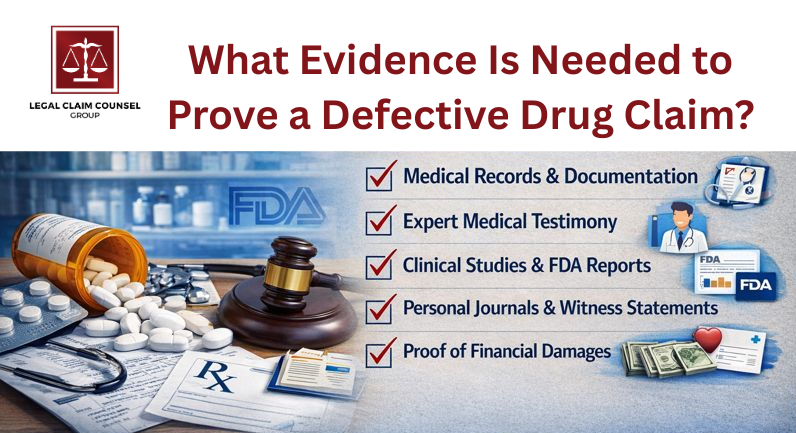
1. Medical Records (The Foundation of Your Case)
Medical records are the backbone of any defective drug claim. They help establish:
- When you were prescribed the drug
- Why it was prescribed
- How long you took it
- The injuries or side effects you experienced
Important records include:
- Doctor visit notes
- Hospital records
- Diagnostic tests (MRIs, blood work, scans)
- Treatment plans related to your injury
These documents create a clear medical timeline connecting the drug to your harm.
2. Proof You Took the Drug
You must show that you actually used the medication in question. This may include:
- Pharmacy prescription records
- Refill history
- Medication packaging or bottles
- Insurance or pharmacy receipts
Even partial documentation can help establish consistent use.
3. Evidence of Your Injuries and Losses
A defective drug claim is not just about the drug it’s about how it changed your life.
Helpful evidence includes:
- Photos of visible injuries
- Medical bills and invoices
- Proof of lost wages or reduced work capacity
- Personal journals documenting pain, emotional distress, or lifestyle changes
This evidence helps quantify pain and suffering, not just medical costs.
4. Expert Medical Testimony
Most defective drug cases rely on expert opinions from:
- Physicians
- Pharmacologists
- Toxicologists
These experts explain how and why the drug caused your injuries and rule out other possible causes. Their testimony often makes or breaks a case.
5. FDA Records, Studies, and Drug Warnings
Strong claims often involve evidence that the manufacturer:
- Knew (or should have known) about the risks
- Failed to warn doctors and patients
- Ignored adverse event reports
This may include:
- FDA safety warnings or recalls
- Clinical trial data
- Published medical studies
- Internal manufacturer documents (obtained through legal discovery)
If a drug was later recalled or given a black box warning, that can significantly strengthen your case.
Types of Defective Drug Claims
Understanding the type of defect helps determine what evidence matters most.
Design Defect
The drug is inherently dangerous even when manufactured correctly.
Manufacturing Defect
A mistake during production caused contamination or incorrect dosage.
Failure to Warn
The manufacturer failed to properly disclose serious risks or side effects.
Many cases involve failure to warn, especially in hormone drugs, cancer-related medications, and long-term use prescriptions.
How Long Do You Have to File a Claim?
Every state has a statute of limitations, which limits how long you have to take legal action. In many defective drug cases, the clock starts when:
- You discovered the injury
- Or reasonably should have known the drug caused the harm
Waiting too long can permanently bar your claim.
If you believe a medication harmed you, speak with a legal professional as soon as possible.
How Legal Claim Counsel Helps Drug Injury Victims
At Legal Claim Counsel, we help victims across the U.S. build strong defective drug cases by:
- Collecting medical and pharmacy records
- Working with top medical experts
- Investigating manufacturer misconduct
- Handling all legal filings and deadlines
You pay nothing upfront, and consultations are 100% confidential.
Related resources you may find helpful:
- Dangerous drug injury claims: https://legalclaimcounsel.com/dangerous-drugs/
- Depo-Provera lawsuit information: https://legalclaimcounsel.com/depo-provera-lawsuit/
- Roundup exposure claims: https://legalclaimcounsel.com/roundup-lawsuit/
- Product liability claims overview: https://legalclaimcounsel.com/product-liability/
What You Should Do Right Now
If you suspect a drug caused your injury:
- Stop taking the medication only after consulting your doctor
- Save all prescriptions and medical records
- Write down your symptoms and timeline
- Speak with a legal professional
The sooner you act, the stronger your claim may be.
Frequently Asked Questions (FAQ)
1. What evidence is needed to prove a defective drug claim?
To prove a defective drug claim, you typically need medical records, proof that you took the medication, expert medical testimony linking the drug to your injury, FDA safety reports, and documentation of your financial and personal losses.
2. Do I need a drug recall to file a defective drug lawsuit?
No. A drug recall is not required. Many defective drug claims are successful even when a medication has not been recalled, especially in failure-to-warn cases.
3. How long do I have to file a defective drug claim?
In most states, the statute of limitations ranges from one to four years. The deadline often begins when you discovered or reasonably should have discovered that the drug caused your injury.
4. Can I file a claim if my doctor prescribed the medication?
Yes. You may still have a valid claim if the pharmaceutical company failed to properly warn doctors and patients about known or foreseeable risks.
5. What compensation is available in a defective drug case?
Compensation may include medical expenses, lost wages, reduced earning capacity, pain and suffering, emotional distress, and other damages related to your injury.
Get a Free Case Review
If you or a loved one suffered harm from a prescription or over-the-counter drug, you may be entitled to compensation.
📞 Free Consultation 🌎 https://legalclaimcounsel.com/
Your health matters. Your story matters. And accountability matters.
This content is for informational purposes only and does not constitute legal advice